
gcp Chartered Architects don’t just specialise in sports, we experience them too.
Being Bristol based for 35+ years and supportive of women in sport, we loved supporting the Bristol Bears at the Big Day Out 2026 at the iconic Principality Stadium, Cardiff.
Congratulations to Bristol Bears Women and Harlequins Men on their well-deserved victories! 👏
A big thank you to Charlie Sherlock and Mark Williams at R&M Williams Ltd for the generous hospitality.
Jonathan Arnold had fantastic day and it was a pleasure to be part of such a brilliant event and maintain our professional relationships with Simon Haile from Aliva UK.
Sport & Leisure

Swapping the Drawing Board for the Padel Court
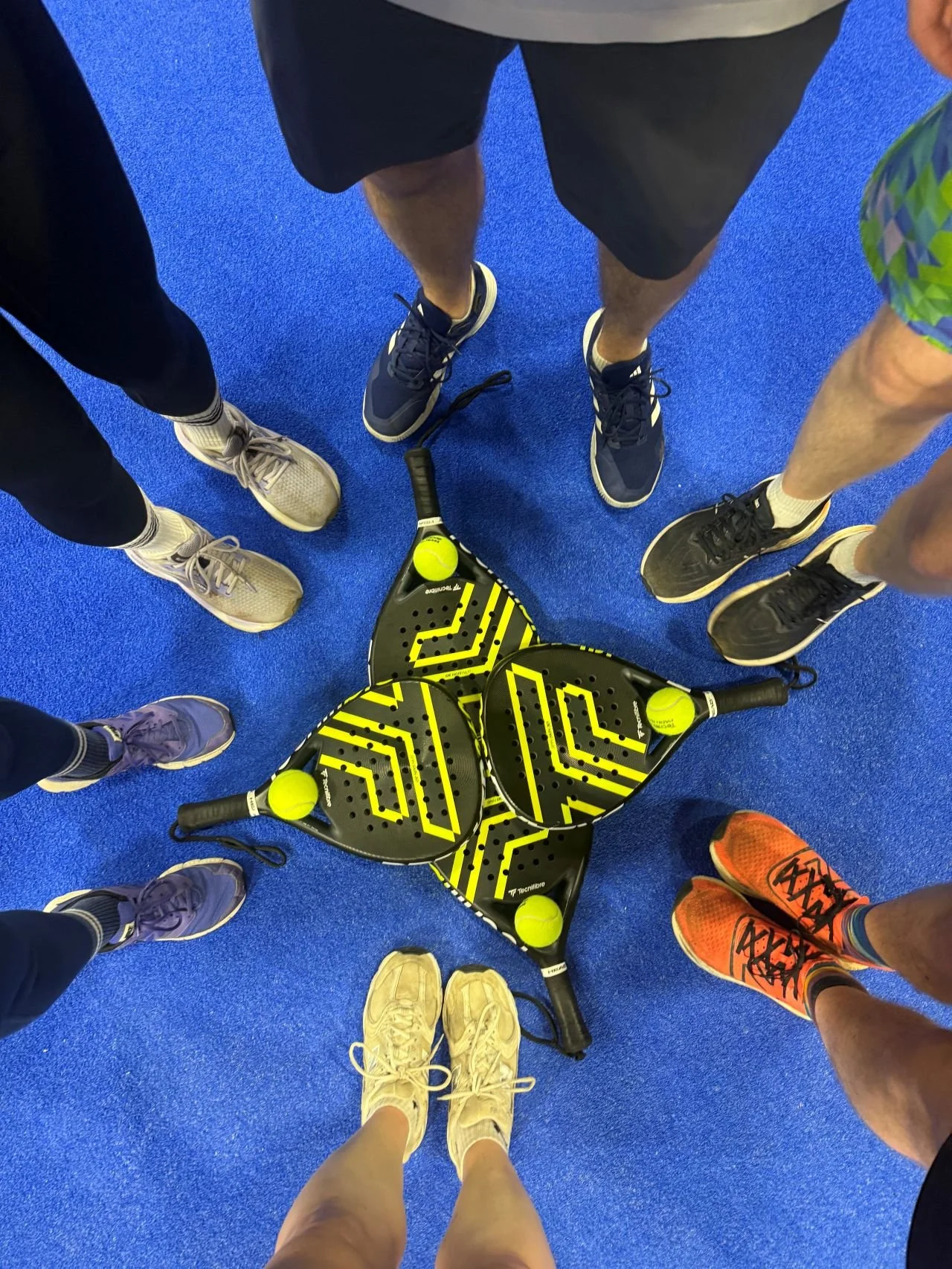
Tuesday night we swapped the drawing board for the court 🎾
At gcp Chartered Architects, as sports specialists, we’re currently working on a range of exciting padel projects and responding to a surge in enquiries across the sector.
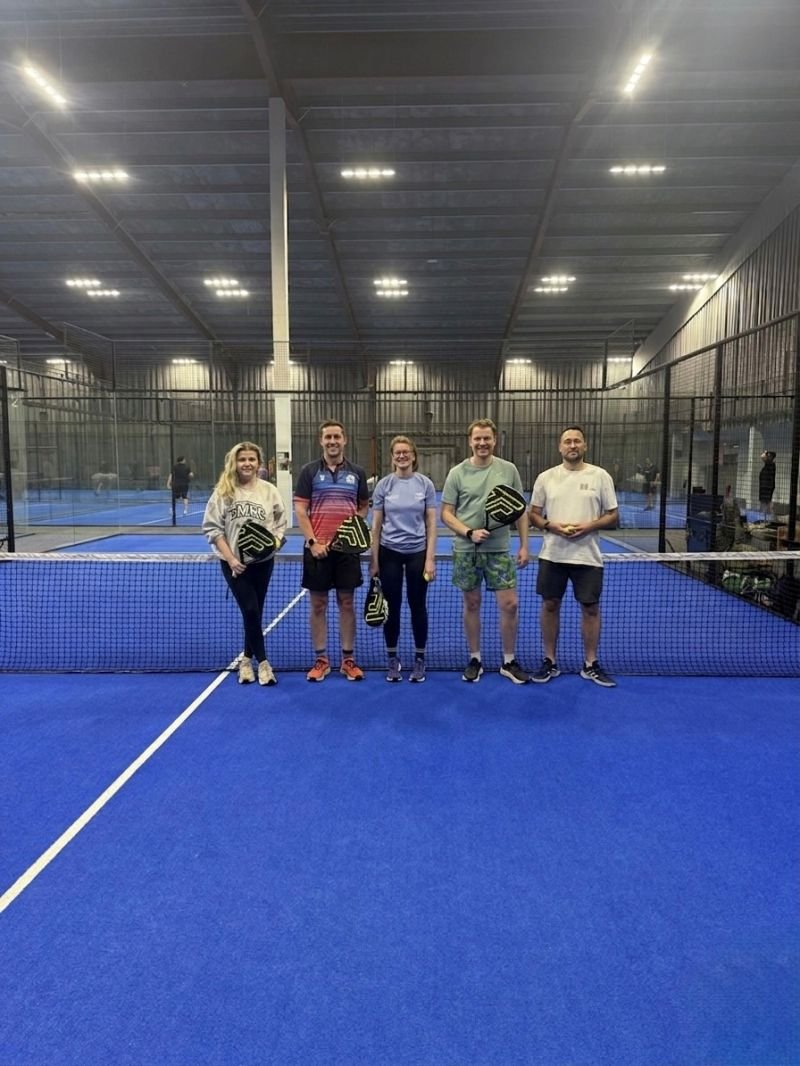
A few of us headed to The Padel Team, Bristol for an office social and to better understand the sport we’re helping to shape.
Safe to say, there were some hidden talents in the team… with a few competitive streaks revealed 👀
Understanding the player experience firsthand allows us to design better, more functional faciltiies for our clients.
Looking to convert a space? Whether you have an underutilised building, existing tennis courts or even a car park you’d like to transform, our sports team is here to help. We can advise on: Planning & Building Regs; Robust Business Cases & Branding (with our partners at PADEL CONSULTING).
Drop us a message to discuss your vision!
RIBA Student Mentoring
This year gcp's Nicola Mead and Richard Glass have been taking part in the RIBA Student Mentoring Scheme with students in their final year of study at University of the West of England.
The scheme gives students practice experience and an insight into the architectural profession whilst they study. It also gives architects the opportunity to connect with architectural schools and support students in their future careers.
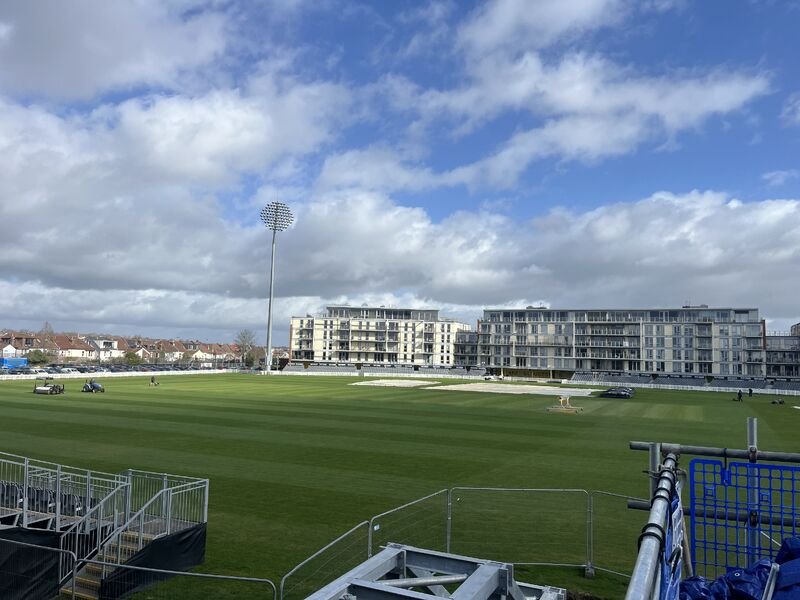
Earlier this month, Nicola and Richard took their mentees to a live construction site managed by Raise Projects Ltd at Gloucestershire County Cricket Club. The students benefitted from seeing how drawings are translated to the built environment and an insight into the complex nature of a project. Thank you to everyone involved!
See more information about our work at Gloucestershire County Cricket Ground here: https://lnkd.in/e_Qpcqc7
How gcp Chartered Architects Designed the Most Inclusive Cricket Flooring at Headingley Stadium
See our previous post on how we created the most inclusive cricket surface.
As we recognise Neurodiversity Week, it’s important to reflect on how design can shape experiences, performance, and wellbeing, especially in specialist environments like sport.
Neurodiversity in architecture refers to the design of built environments that accommodate the diverse ways people think, learn and process sensory information. It recognises that neurological differences, such as autism, ADHD, dyslexia, are natural variations in human cognition.
Designing with neurodiversity in mind means thinking beyond minimum standards and considering how environments are experienced by everyone. Inclusive design is not an extra, it is essential to creating spaces where all people can perform at their best.
It shifts the focus away from a “one-size-fits-all” approach toward creating flexible, sensory-friendly spaces that allow individuals to control their environment. This includes designing for sports facilties.
Get in touch with our sports team Richard Glass, Matt Bonney, Jonathan Platt and Owen Faunt to discuss your requirements for inclusive design.
International Cricket Comes to Bristol: Our Work with Gloucestershire County Cricket Club
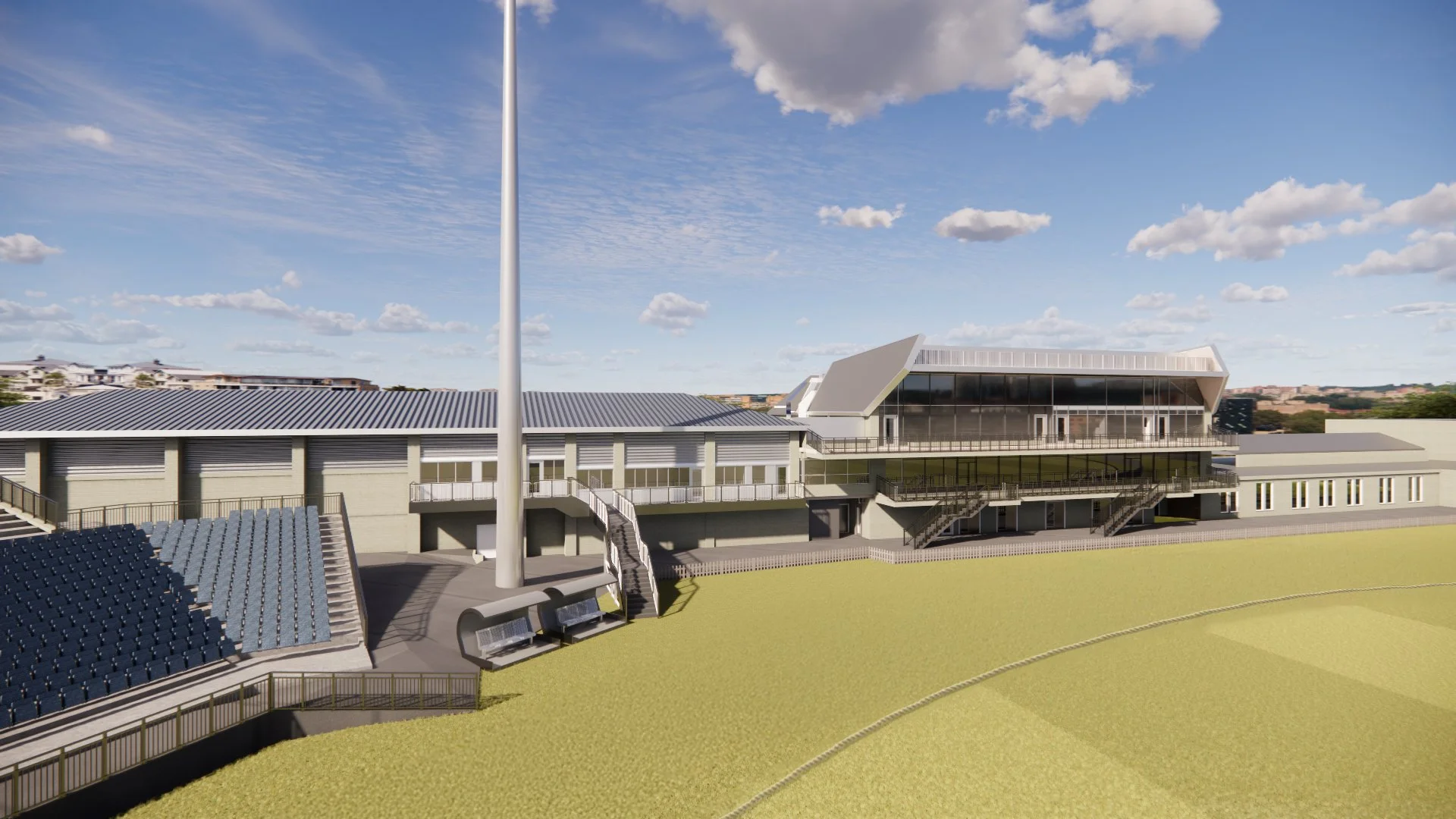
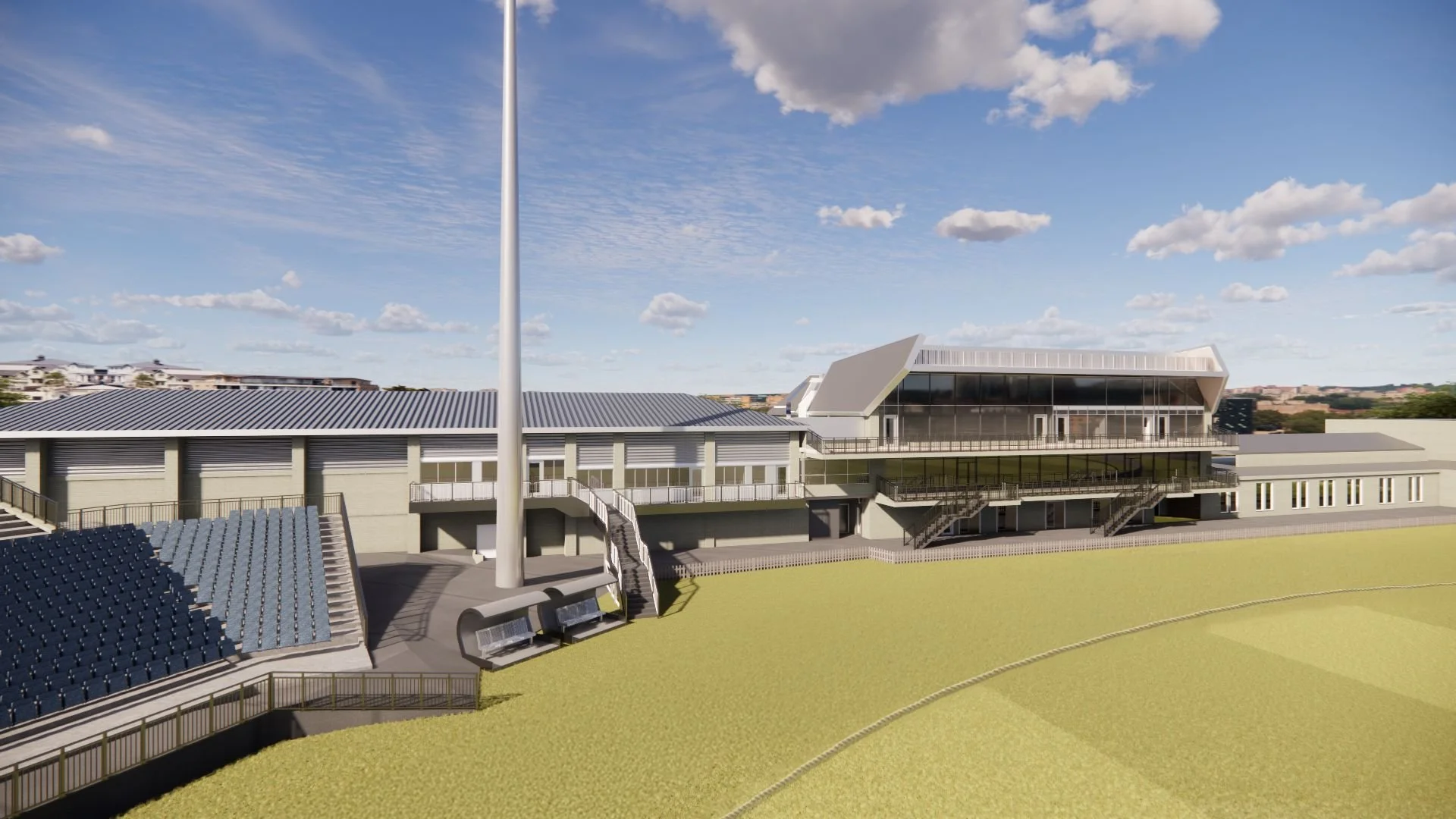
Gloucestershire County Cricket Club has secured the rights to host world cup matches at the Seat Unique Stadium in Bristol in 2026. Following our longstanding partnership with the club, gcp is now working on the essential improvements needed to meet current ECB standards.
Building on a Strong Partnership
Our partnership with Gloucestershire County Cricket Club spans several years, and in conjunction with work at other county grounds and a breadth of experience in developing grassroots cricketing facilities, we've established a thorough understanding of ECB standards for international cricket venues. This experience positions us well to deliver the improvements needed for 2026.
Essential Improvements
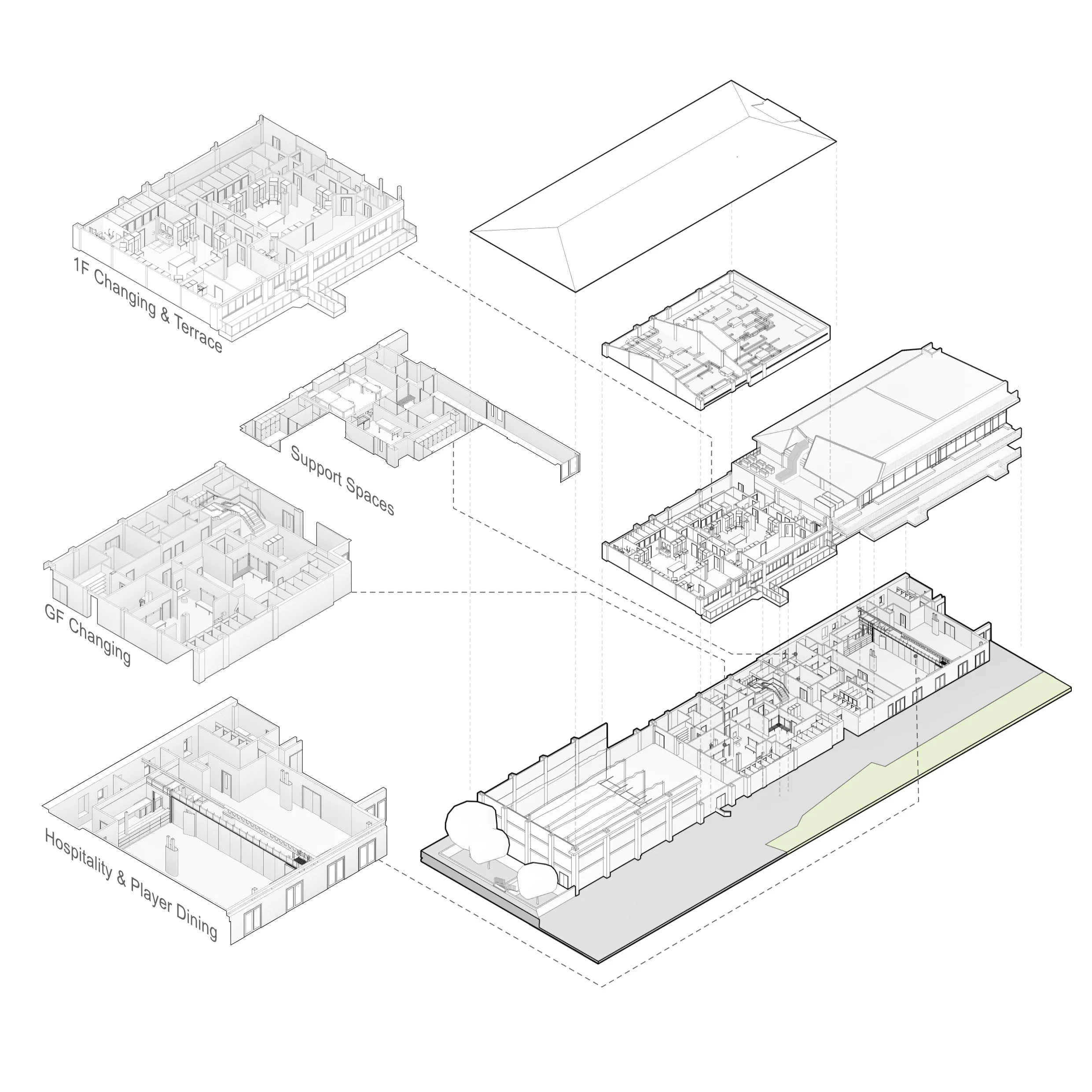
The essential improvement work focuses on key areas required to satisfy international cricket standards, with a particular emphasis on player’s facilities including:
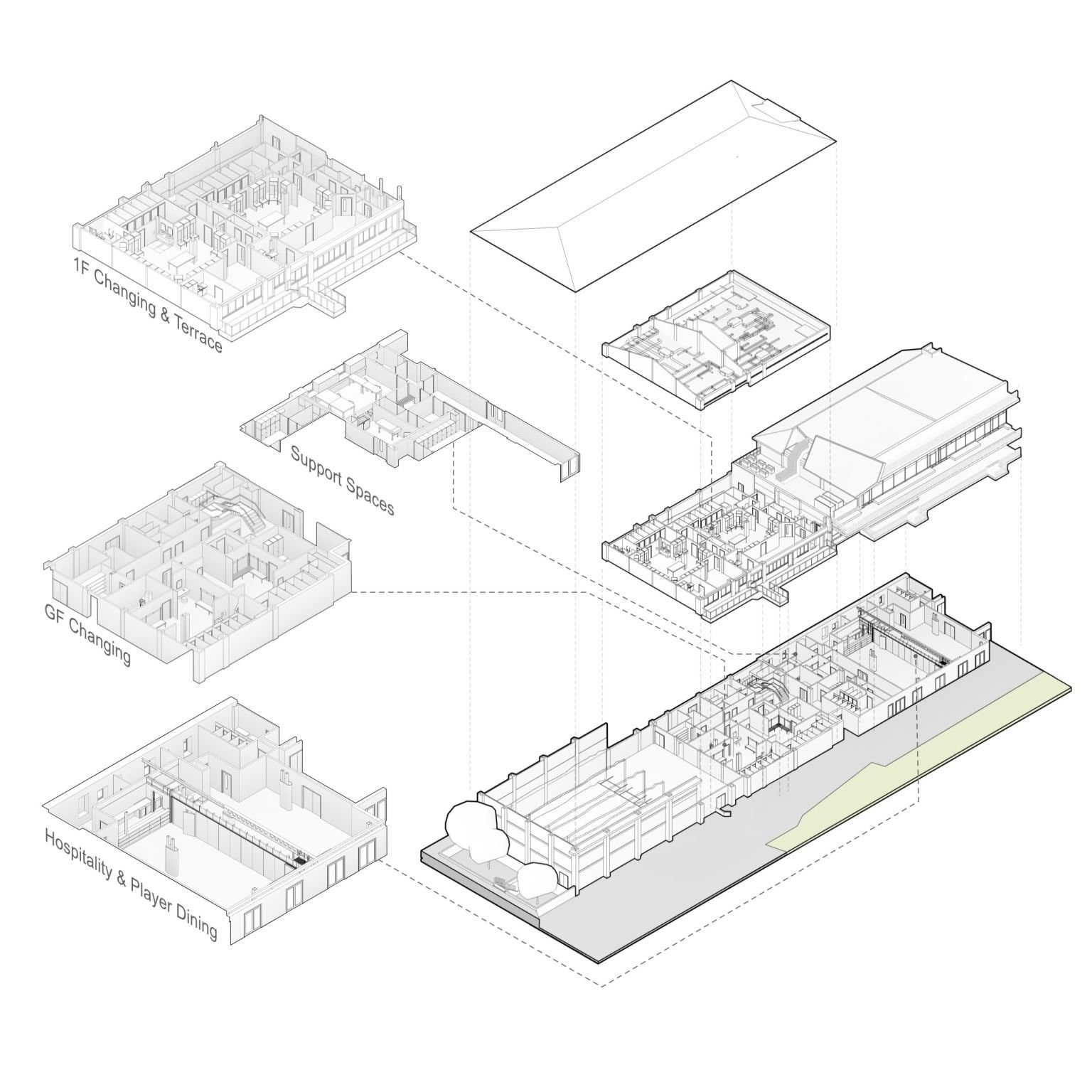
Extension and renovation of existing player dressing rooms including a mezzanine extension over the Cricket Centre
A new external player’s terrace and player’s bridge
Extended umpire and match official facilities
Renovated and extended ground floor dressings room provisions to accommodate improved public changing facilities and T20 double headers for club and international cricket
Moveable partitions to the Jessop Bar providing flexible spaces for hospitality and player’s dining.
Project Timeline
With international world cup matches scheduled for June 2026, the timeline is challenging. The works were tendered during summer 2025, with construction beginning in October 2025 with Raise Projects. This schedule ensures the facilities will be ready for the 2026 international fixtures.
We are thrilled to announce that planning has been approved by Bristol City Council for the approval of amendments to the external façade of the player & match official area and Gloucestershire County Cricket Club have issued their own announcement on the works.
Continuing Our Cricket Expertise
This project builds on gcp's established experience in developing cricket facilities. We continue to work closely with the England and Wales Cricket Board on Design Guidance Notes, with our most recent contribution focusing on Covered Outdoor Practice Facilities, more commonly referred to as Cricket Domes, announced here by the ECB.
The work with Gloucestershire County Cricket Club represents another step in our ongoing commitment to improving cricket infrastructure across the country.
Planning Granted for the Sheffield Caribbean Sports Centre Pavilion
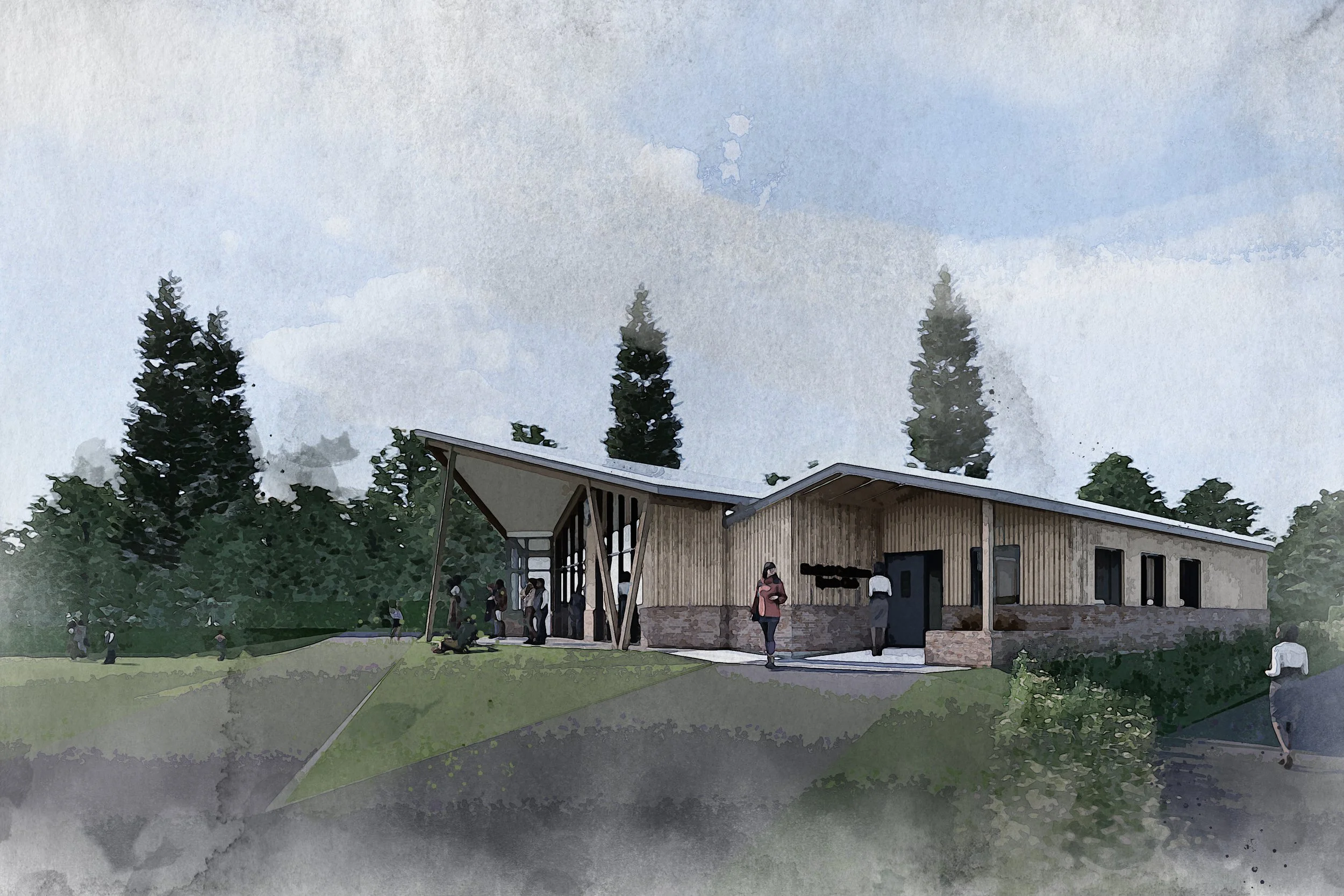
Another milestone for the long-anticipated pavilion project at SCSC. gcp will continue to work closely with the club, stakeholders, and consultants to develop the design for tender.
Works commence on the Somerset CCC Centre of Excellence refurbishment
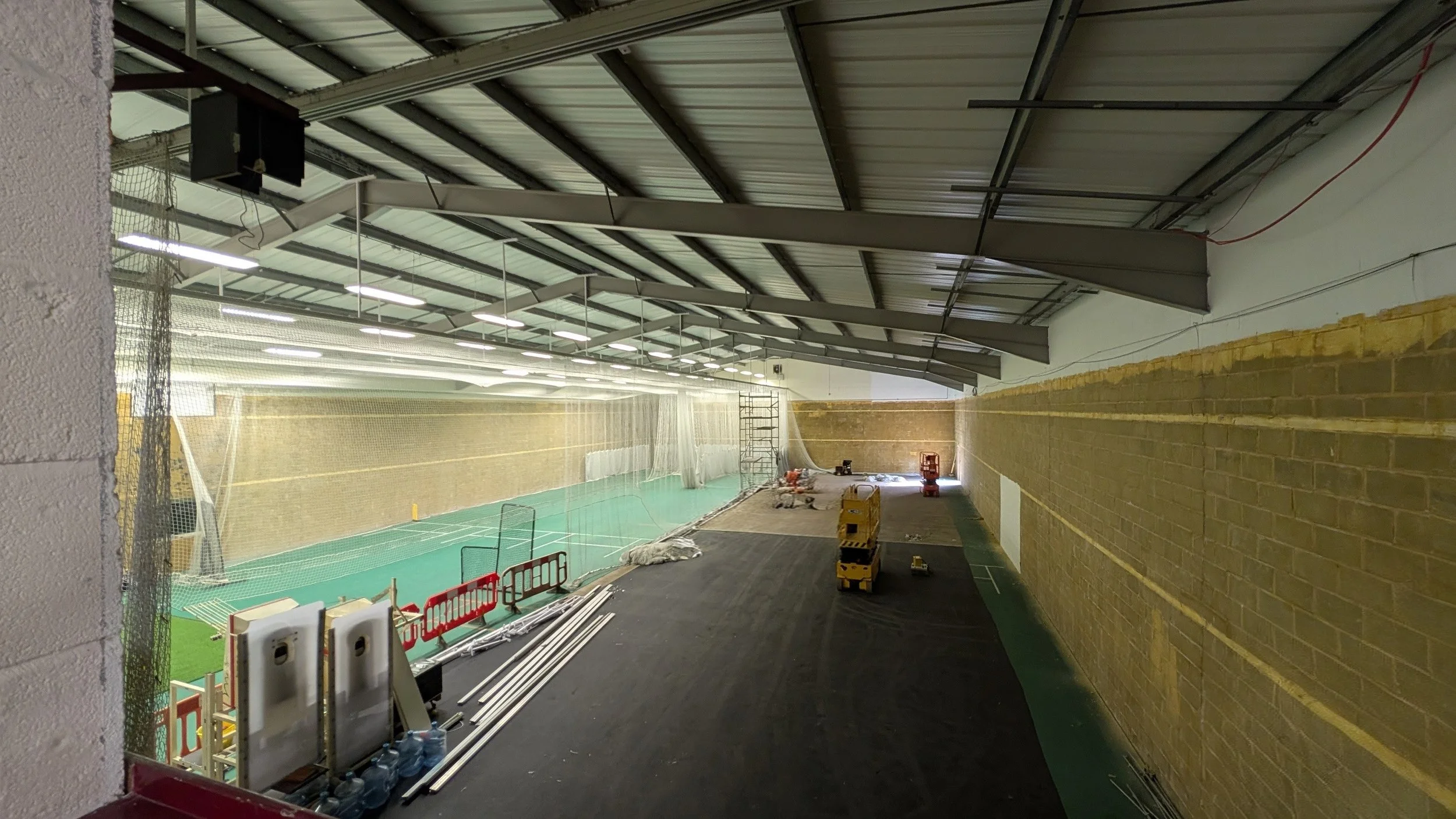
gcp Chartered Architects have been working closely with Somerset CCC and the ECB facilities team to reimagine their indoor training facility at the Cooper Associates County Ground in Taunton.
The existing facility is being given a new lease of life to better align with the modern game and provide improved performance for both the elite level and pathway cricket.
Years of experience providing similar centres for Essex, Gloucestershire, Middlesex, and Yorkshire has fed into this design to create one of the best training facilities in the country.
Works will continue at pace through the autumn break with the centre returning to use for the winter training schedule. Who knows what Somerset will achieve on the pitch next year!
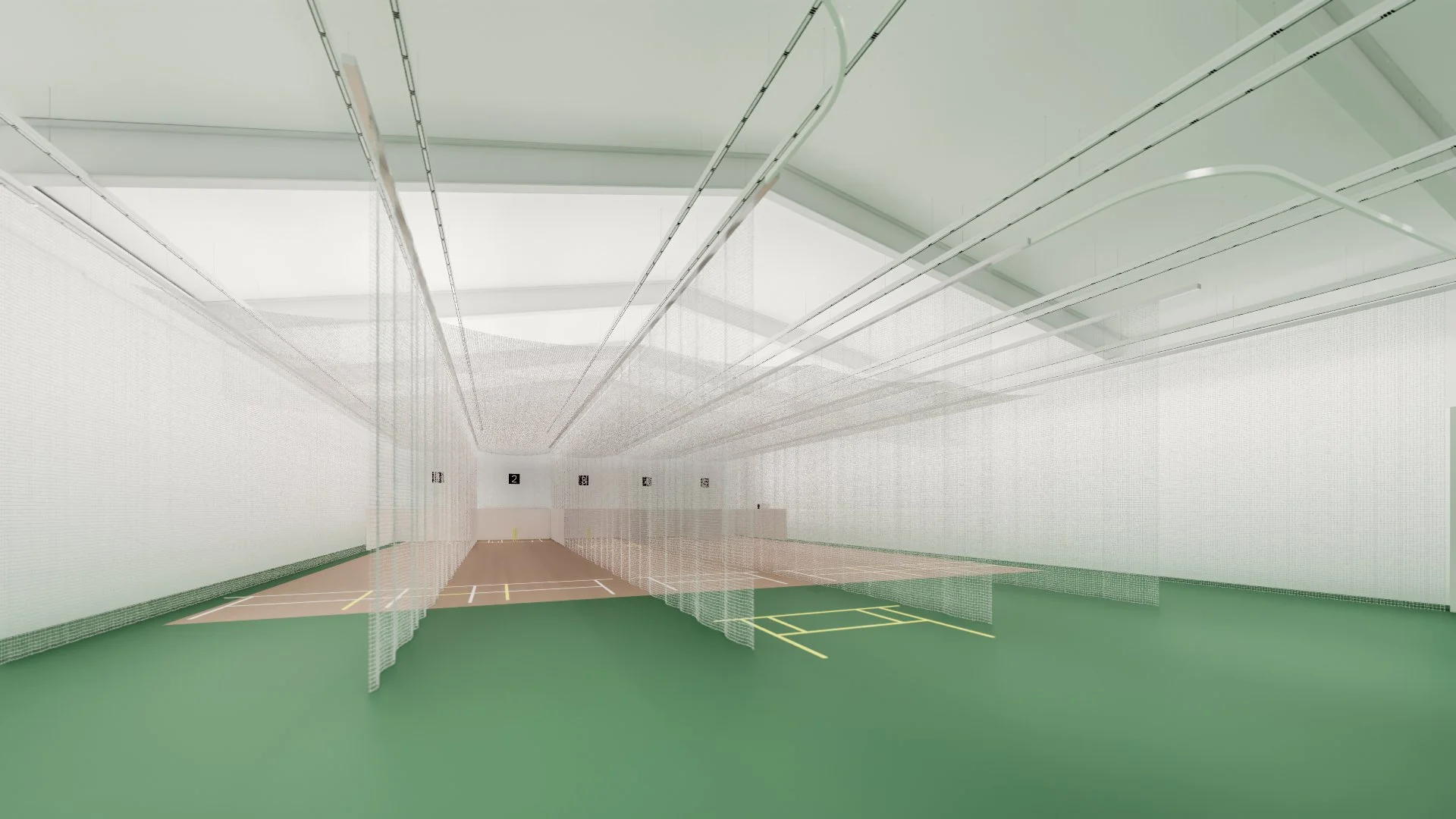
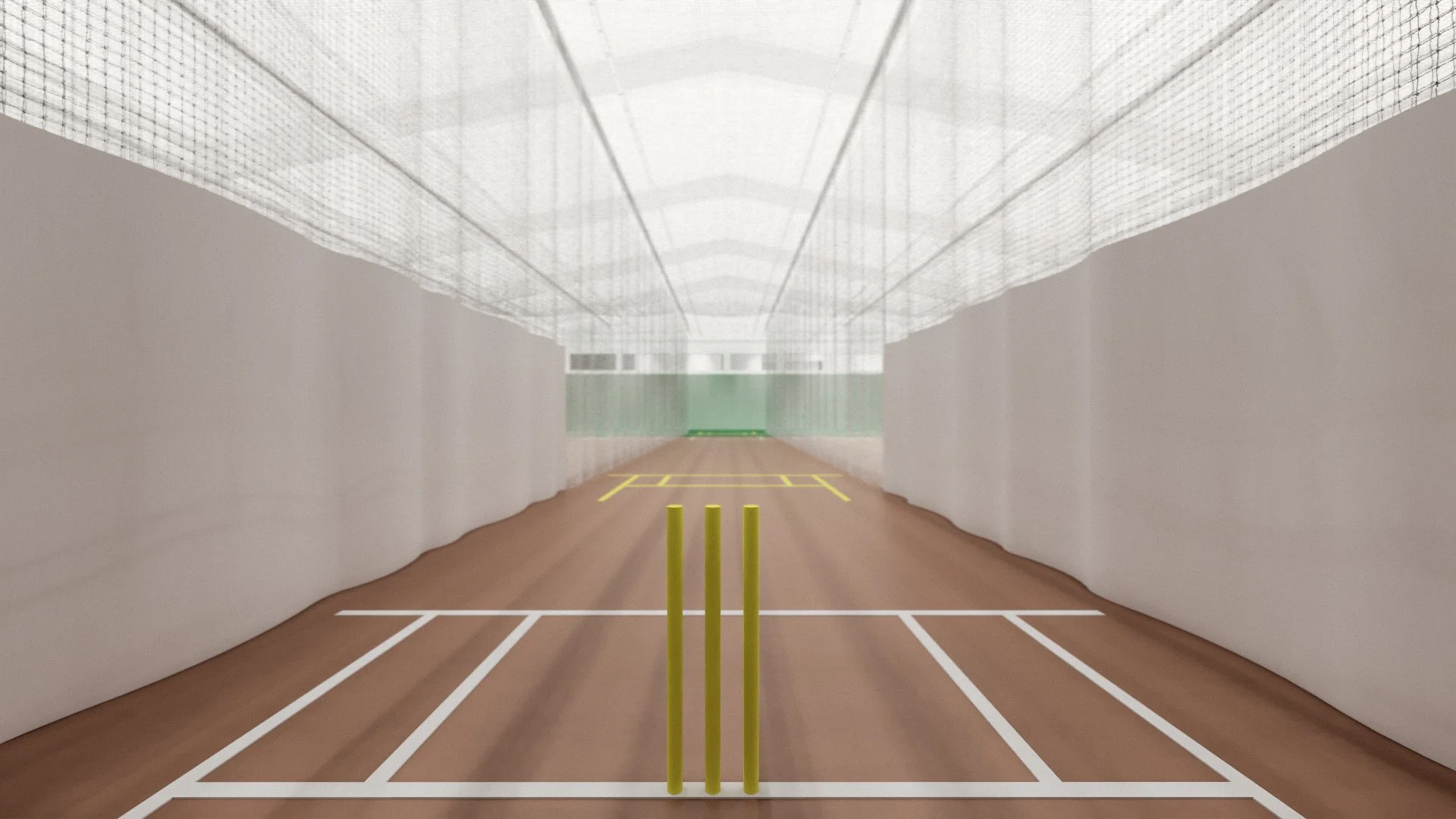
Innovation in Play: Designing for Inclusivity
Innovation in Play: How gcp Chartered Architects Designed the Most Inclusive Cricket Flooring at Headingley Stadium
At gcp Chartered Architects, we believe in constantly pushing the boundaries of sports facility design. Since the 2019 ODI World Cup, we've proudly partnered with the England and Wales Cricket Board (ECB) and cricketing counties across the UK to develop the most accessible and inclusive training facilities possible.
Our extensive knowledge, accrued through groundbreaking initiatives like the Urban Cricket Centre Initiative and the Covered Outdoor Cricket Facility Guidance Document, has been directly applied to our latest cricket centre refurbishment at Headingley Stadium for Yorkshire County Cricket Club (YCCC).
The Challenge: Designing for Optimal Ball Contrast and Inclusivity
Every cricket centre presents its unique challenges and opportunities for improvement. At Headingley, the coaching staff expressed a specific desire: to have the indoor facility's flooring replicate the authentic colour of a grass wicket.
However, flooring colour in cricket facilities is far more complex than just aesthetics. Optimal ball contrast is absolutely critical for player health and safety. This challenge is further complicated by the diverse range of ball colours used in modern cricket – from traditional red and white to the increasingly common pink for day/night matches.
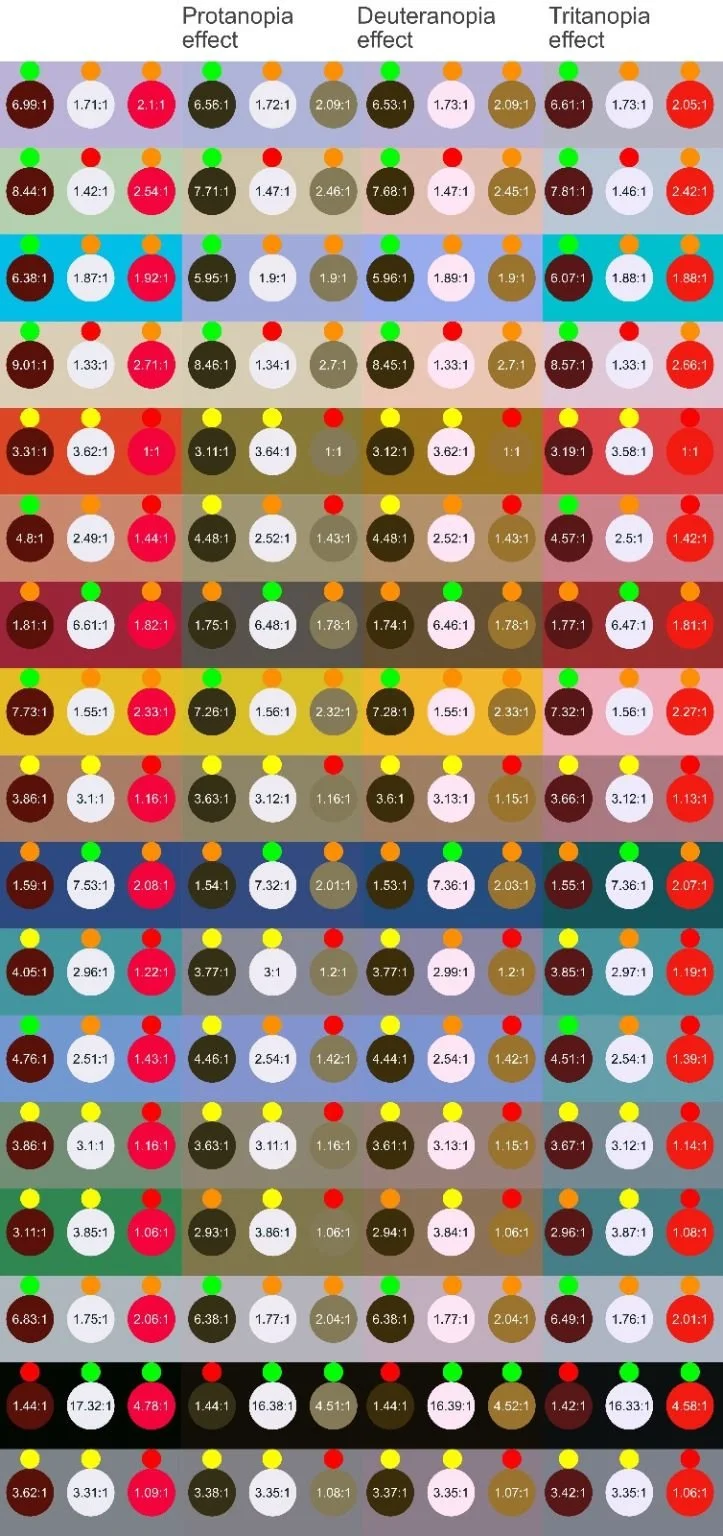
Recognizing this, our team decided to undertake a comprehensive review of available flooring colours against each ball type. But we went a significant step further. We also seized this opportunity to investigate contrast for individuals with colourblindness, a condition reported to affect approximately 1 in 12 men and 1 in 200 women worldwide. This commitment ensured our design would be truly inclusive.
Our Rigorous Research Process: From Samples to On-Site Testing
Our meticulous research process began by evaluating 17 potential flooring colours, carefully whittling them down to the top 5 most suitable options.
To ensure real-world performance, samples of these five colours were then tested on-site at the Gloucestershire Indoor Cricket Centre. We chose this facility, which gcp also refurbished in 2019, because it boasts a fully compliant ECB TS3 lighting design – a crucial element that has been precisely replicated at Headingley. This allowed us to simulate the exact playing conditions, ensuring accurate and reliable results.

The Optimal Choice: Floor Colours for Unrivaled Inclusivity
Following extensive testing and analysis, the decision was clear: an earthy shade was selected as the most suitable colour for the wicket, closely replicating the look of a grass pitch, while a darker green was chosen for the outfield.
These colour choices have now been installed at Headingley Stadium, providing what we believe is the most inclusive playing surface in the country. This is a significant step forward in ensuring safe, high-performance training environments for all cricketers, regardless of their visual perception.
We look forward to receiving feedback from both YCCC and international players on the impact of this surface. Through further analysis, alongside the ECB, we hope this will become the standard specification for indoor cricket centres across England and Wales.


From Concept to Completion: State-of-the-Art Indoor Cricket Centre
From Concept to Completion: Headingley Stadium's State-of-the-Art Indoor Cricket Centre is Ready for Action!
Five months on from putting pencil to paper, the brand-new indoor cricket centre at Headingley Stadium stands complete, perfectly timed for the highly anticipated England vs. India test match!

This achievement is a testament to gcp Chartered Architects' expertise in cricket facility design. For over 15 years, we've collaborated closely with the England and Wales Cricket Board (ECB), developing technical guidance and delivering cutting-edge facilities nationwide. This shared knowledge was absolutely crucial in projects like Headingley's Indoor Cricket Centre, especially given its incredibly tight deadline. Despite the need to have this facility ready for June 20th, gcp successfully integrated the latest learnings from the Covered Outdoor Cricket Facility Guidance Document and our ongoing research projects.
Innovation in Action: Key Design Features
1. Prioritizing Player Safety: A Game-Changer in Access Design
Headingley Indoor Cricket Centre presented a unique design challenge: ensuring safe access to additional rooms directly from the practice area. Historically, this posed a risk of ball strikes when players exited changing rooms. To eliminate this safety concern, the new practice area is bounded by a tension net.
While tension nets offer numerous benefits, they can complicate access. Drawing on our extensive research for the Covered Outdoor Cricket Facility Guidance Document, gcp explored solutions to allow seamless entry without the risk of ball strikes or balls escaping the practice area.
To address the access challenge, we introduced a protected route behind the bowler’s run-up, creating safe and easy entry to Lane 1 without needing to cross Lane 2. For Lane 2, where space was tighter, we designed a specially padded access gate integrated directly into the tensioned net, positioned strategically outside the angle for ball strikes. Crucially, clear lines of sight around all access points ensure safe entry and exit for everyone using the facility.

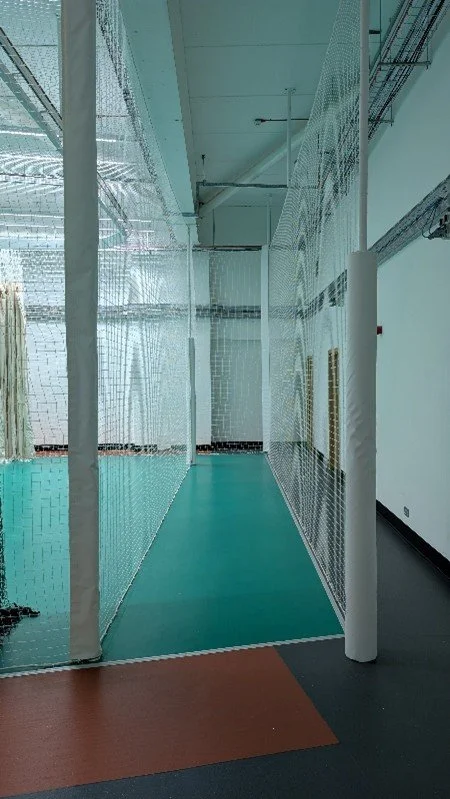


2. Inclusive Design: High-Contrast and Spike-Resistant Flooring
The flooring throughout the Headingley centre was specified to achieve the highest levels of ball contrast, ensuring optimal visibility for all players, including those with colorblindness. This commitment makes Headingley one of the most inclusive playing environments in the country – a true testament to designing with health and safety at the core.

Beyond the practice area, we specified durable, stud-resistant flooring to ensure safe player access to the 3rd/4th changing rooms. To enhance safety further, we clearly defined a 1-meter "risk zone" around the practice area using a contrasting floor color. While bay nets should always be extended during practice, this visual cue helps identify any residual risks if nets are ever retracted.
3. Future-Proofing Excellence: Ready for Advanced Coaching Technology
Our experience extends beyond elite facilities. In 2021, gcp refurbished the William Perkin CofE sports hall, transforming it into the Wilf Slack Cricket Centre. As part of that project, we developed the most sophisticated lane camera system in the country, allowing for live viewing and recorded playback for coaching sessions.
This unique knowledge has been integrated into the Headingley Indoor Cricket Centre. While not installed yet, the facility is now fully prepped for easy camera installation at any future point. This means that coaches will be able to add high-definition slow-motion playback to analyse every aspect of bowlers' and batters' techniques, ensuring the centre can evolve with the game.
A Collaborative Success Story
We eagerly anticipate feedback from the coaches and players at Yorkshire County Cricket Club (YCCC). Their insights will be invaluable as we continue to refine our indoor centre designs, ensuring we best serve the exciting future of cricket in England and Wales.
Special recognition must be given to our key partners on this project:
The Operations Team at YCCC: Integral to the project's success, their clear communication and fantastic knowledge of the existing centre and maintenance strategies were truly invaluable.
Construction North Group (CNG): The Contractor worked tirelessly with exceptional attention to detail, ensuring this centre achieved the ECB’s technical standards ahead of the England vs. India test match.
Masterplan: Sheffield Caribbean Sports Club
gcp have recently submitted a pre-planning application for the redevelopment of Sheffield Caribbean Sports Club. Over the last year gcp have undertaken several rounds of consultation with club members, national governing bodies, local residents and other stakeholders to identify the most appropriate development to ensure the long-term sustainability of SCSC. These plans have public and private sector backing which should enable swift delivery subject to planning approval.
The proposals include:
The creation of an artificial 7-a-side football pitch would allow the club to train year-round on-site. The artificial pitch would double as an improved hockey training surface for Chapeltown Hockey Club.
The introduction of two netball courts would allow the SCSC netball team to return to The Common and reduce club costs for facility hire in the city centre. These courts would also double as tennis courts, a basketball court, and a 5-a-side football pitch.
Four padel courts, funded through private investment, would provide a home for the fastest growing sport in the UK. Revenue from these courts should help to fund the other improvements.
A three-lane outdoor covered cricket facility would provide state-of-the-art practice lanes which maintain their performance year-round without the capital expenditure associated with a traditional sports hall.
Rationalised parking to increase the number of vehicle spaces on site and improve safety for pedestrians and vehicles moving through the site.
Landscaping features to improve the ecology and biodiversity on site, as well as create natural terraces to improve viewing opportunities for the cricket pitch.
This masterplan pre-app will run in tandem with the clubhouse planning application which is expected to receive a decision this summer.

ECB Design Guidance Note

Over the last 18 months, gcp Chartered Architects have led an extensive team of consultants, alongside the England & Wales Cricket Board, to produce a design guidance note for ‘Covered Outdoor Cricket Facilities’. The process involved a significant amount of technical rigour and research, including: consultation across ECB departments, conversations with various other national governing bodies and manufacturer and supplier meetings. All of this to achieve an ‘inside out’ approach offering a valuable new opportunity for those wanting to provide cricket training and playing facilities year-round.
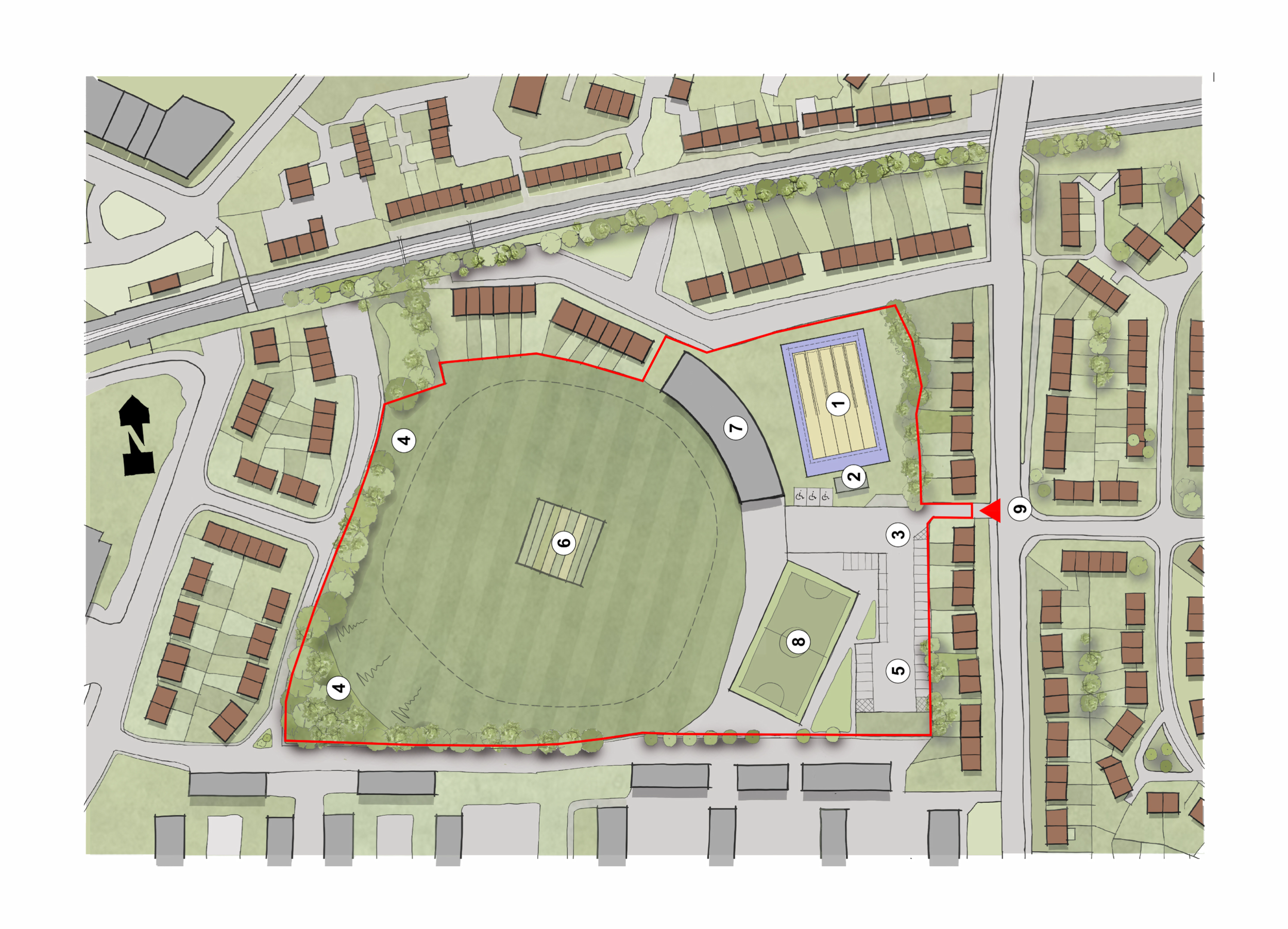
Materplan: Example Urban Scenario
The project began with a team meeting at the ECB’s Covered Outdoor Cricket Facility pilot scheme, Bradford Park Avenue. The meeting allowed the team to analyse the pilot facility in depth, established what was working well and what might need clarification as a part of the technical design guidance. gcp were also commissioned to undertake a photographic study of the facility as a part of the research phase.
Following the Bradford meeting, gcp embarked upon the wider research phase, initially meeting with:
Manufacturers, and suppliers of netting, surfacing, structures, canvasses and even bowling machines!
National governing bodies for other sports
Regional cricket clubs
A team of specialist subconsultants which included a civil and structural engineer, an MEP consultant, an accessibility consultant, an acoustician and a building regulations consultant.

Single Lane General Arrangement Plan
Through close collaboration with the ECB Facilities Services team, gcp proceeded to the design and written phase of the project, with each consultant feeding in their own contributions, comments, and expertise along the way.
The evolved document underwent extensive in-house review from both gcp and the ECB before being released as a culmination of approximately 18-months’ work, including input from dozens of different experts and professionals.

Net configurations
This project is the latest in an ongoing 15-year working relationship between gcp and the ECB, where we have provided architectural and wide ranging consultancy services. We’re extremely proud of the continued relationship with such a prestigious sporting national governing body. We’re also very grateful to the ECB for their continued support. Projects like this are only ever made possible with mutual trust, collaboration, and dedication.
Finally, we are thrilled to announce that the documents are now available to download on the ECB website, here: https://www.ecb.co.uk/news/4263505 .


Bradford Park Avenue (ECB Pilot Scheme)
Works Commenced: Headingley Stadium
Works have commenced on site at Headingley Stadium to upgrade their indoor practice facility ahead of the England v India test match this summer. gcp Chartered Architects were recommended to Yorkshire County Cricket Club (YCCC) by the England and Wales Cricket Board (ECB) to design and co-ordinate the refurbishment works. gcp were appointed at the start of February 2025, prepared the tender pack by the start of March with a view to getting on site at the start of April, and completing the works by mid-June.

The proposals will greatly improve the health and safety strategy for the facility by complying as far as reasonably possible with ECB technical guidance. Learnings have also been taken from our recent technical guidance note for the ECB on Covered Outdoor Cricket Facilities, particularly around the use of tensioned net environments and a considered method of entry and escape through a potential risk zone for inclusive and safe access.

Construction North Group (CNG) have made great progress with the strip out and demolition works. We look forward to seeing progress on site over the coming weeks.

Oxfordshire Cricket and gcp Architects Announce New Partnership
gcp are excited to announce that we have recently partnered with Oxfordshire Cricket. At gcp, we have a passion for cricket and a reputation for developing the cricket facilities that often sit at the heart of a community. We’re looking forward to supporting Oxfordshire Cricket in their strategic priority areas, which (among others) include: Engaging children and young people, transforming women’s and girls’ cricket and supporting their communities.
You can read more about this partnership here.
#cricket #architecture #design #OxfordshireCricket

Appointment: Barnsley Gymnastics Club
Following referral by a national sport equipment provider, gcp were appointed by Barnsley Gymnastics Club to assess the feasibility of the club’s relocation.
We firmly believe that sport development needs to happen in partnership with key local actors to have maximum impact in the community. We therefore consulted with key stakeholders including the National Governing Body for Gymnastics, the Council, and the local Active Partnership to develop the feasibility study. Alongside our strategic review, we developed a project brief and cost plan to give the club an accurate picture of the investment involved to enable their ongoing growth.

Sheffield Caribbean Sports Club: Public Consultation

On the 16th of July gcp had the opportunity to engage with the public through a consultation event for the redevelopment of the Sheffield Caribbean Sports Club (SCSC).
The project came about as Des Smith, the founder of SCSC and BBC Sports Personality ‘Unsung Hero’ at the end of 2023, gaining traction and prompting the redevelopment of the club.

It was a lively day engaging with residents, coaches, children that play at the club and several volunteers for the club. It was great to receive an overwhelmingly positive response to the flexible approach we’ve taken on the design that allows for a functional, future proof space.
Additionally, the introduction of diverse opportunities for sports at masterplan level was welcomed by the community, and we were happy to see the growing excitement for developing better opportunities for women in sports from the club as well as from the public.

We’d like to thank everyone that attended as well as the club and volunteers for giving us a taste of the welcoming community that already exists at SCSC, it is our goal to create spaces that match the inspiring nature of the people that use them.

Osterley Cricket Club Redevelopment

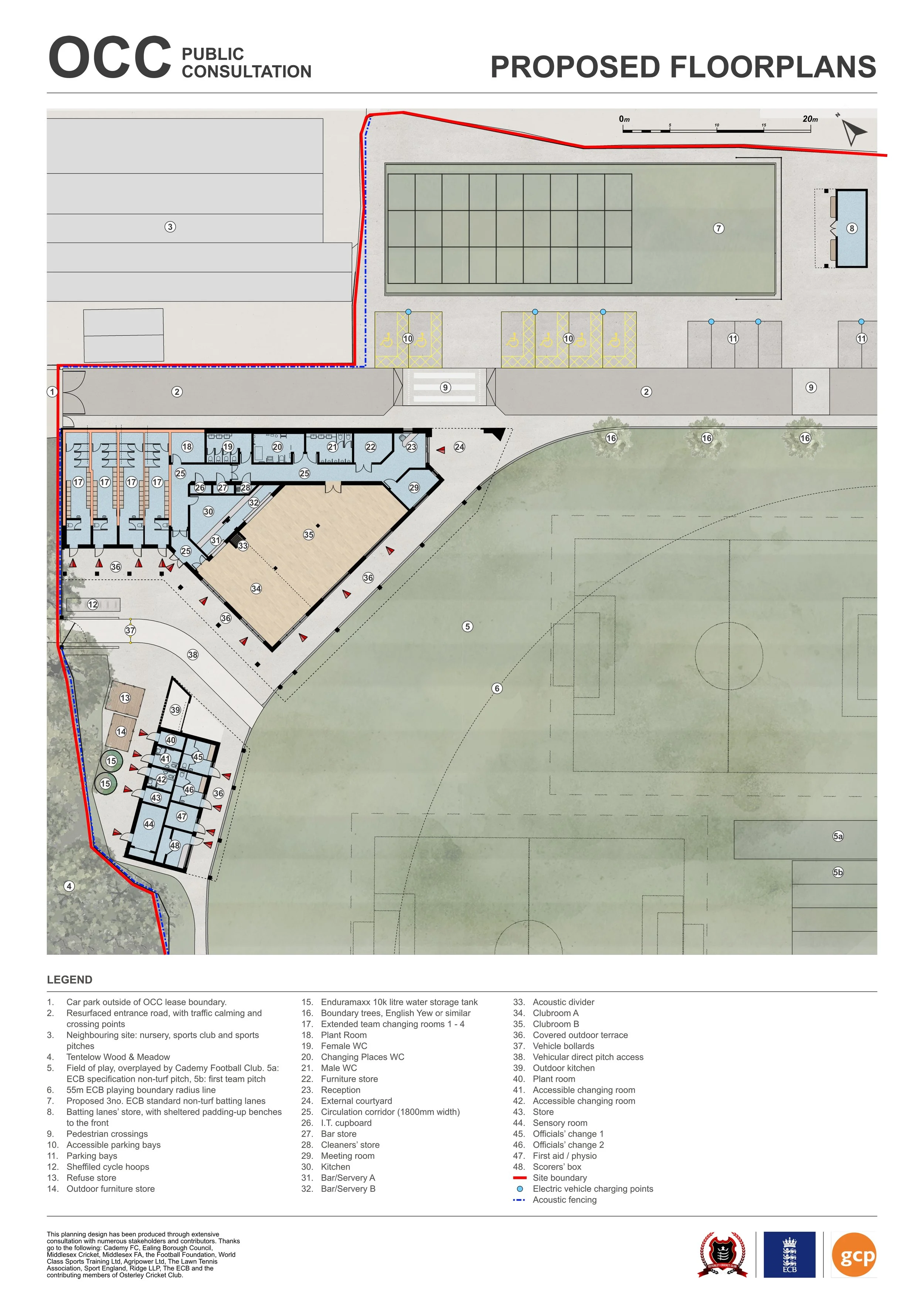

Following a devastating fire in 2022, which destroyed most their clubhouse, Osterley Cricket Club appointed gcp to prepare a detailed feasibility study for the redevelopment of their ground just off Tentelow Lane in Southall. The ground is set within the historic and listed landscape around Osterley House. The site is busy throughout the year and is also the home of Cademy FC, a vibrant and successful youth football club with links to many premier league football teams. The feasibility study quickly highlighted that in order to deliver the club’s vision for the site, a comprehensive masterplan was required to allow for a phased redevelopment as funding becomes available.
The preliminary planning stage masterplan design includes a remodelled site with parking improvements and ecological enhancements to support biodiversity, a new clubhouse incorporating the remainder of the fire-damaged changing block, a secondary officials’ block with sensory space, and 3 new practice batting lanes. The planning design is a result of extensive collaboration between the club, the England & Wales Cricket Board and numerous stakeholders including Ealing Borough Council, Sport England, Middlesex Cricket, Middlesex FA, The Football Foundation and specialist subconsultants.
The final stage of the planning stage design development is a half day public consultation event at the club on Wednesday 10th July between 12 noon and 7pm. Following feedback received from the consultation designs will be revised and developed for planning submission by September 2024.
Planning consent for first zero-carbon clubhouse in the UK!

This small project in Bristol for Downend & Frenchay Tennis Club brings together two of gcp’s passions: sport and sustainability. From conversations with the Lawn Tennis Association (LTA), we believe this is the first LTA-affiliated clubhouse in the country to be designed as zero-carbon! This is a great step for the sport, and is particularly poignant as the LTA transitions into its 1st full phase of its Environmental Sustainability Plan.
The new clubhouse is on the grounds of Frenchay Cricket Club. With the tennis club going from strength to strength, it became quickly apparent that the club required facilities of its own. DFTC appointed gcp to develop a project brief and designs for a tiny slither of land, located between the tennis courts and the site boundary. Given the site’s constraints, we focused on the core spaces required to support the club: a clubroom to host post-match teas, enable coaching briefings, and provide an all-important hub for club socials; a sheltered viewing area; and toilet and showering facilities. The 75sqm facility is designed to ensure accessibility for all with level thresholds throughout. Materials have been chosen to be robust, to ensure the club’s ongoing enjoyment of the facility without incurring high maintenance costs.
The club’s ambitions did not stop at a functional clubhouse. Clubchair Penny White and fellow committee members wanted an environmentally sustainable clubhouse, and we couldn’t be more pleased to support this ambition. We specified high performing thermal fabric and worked with an M&E consultant to ensure heating and ventilation systems would be as efficient as possible. We explored the option of Passivhaus certification. Unfortunately, the site constraints limited us to a long rectangular form running along a north-south axis, not ideal for Passivhaus. We modelled energy use and on-site energy generation and storage, ultimately achieving a design solution which is zero carbon in operation.
Construction itself has a high environmental impact. With the support of Structural Engineers at Build Collective, we looked at construction systems to minimise the carbon footprint of the building, whilst maintaining the high performance standards. An engineering joist system was chosen, along with wood-based insulation for walls and roof.
Having supported the Club in their funding applications to South Gloucestershire Council and Enovert, we are delighted that the project has secured substantial funding and look forward to being on site next year!
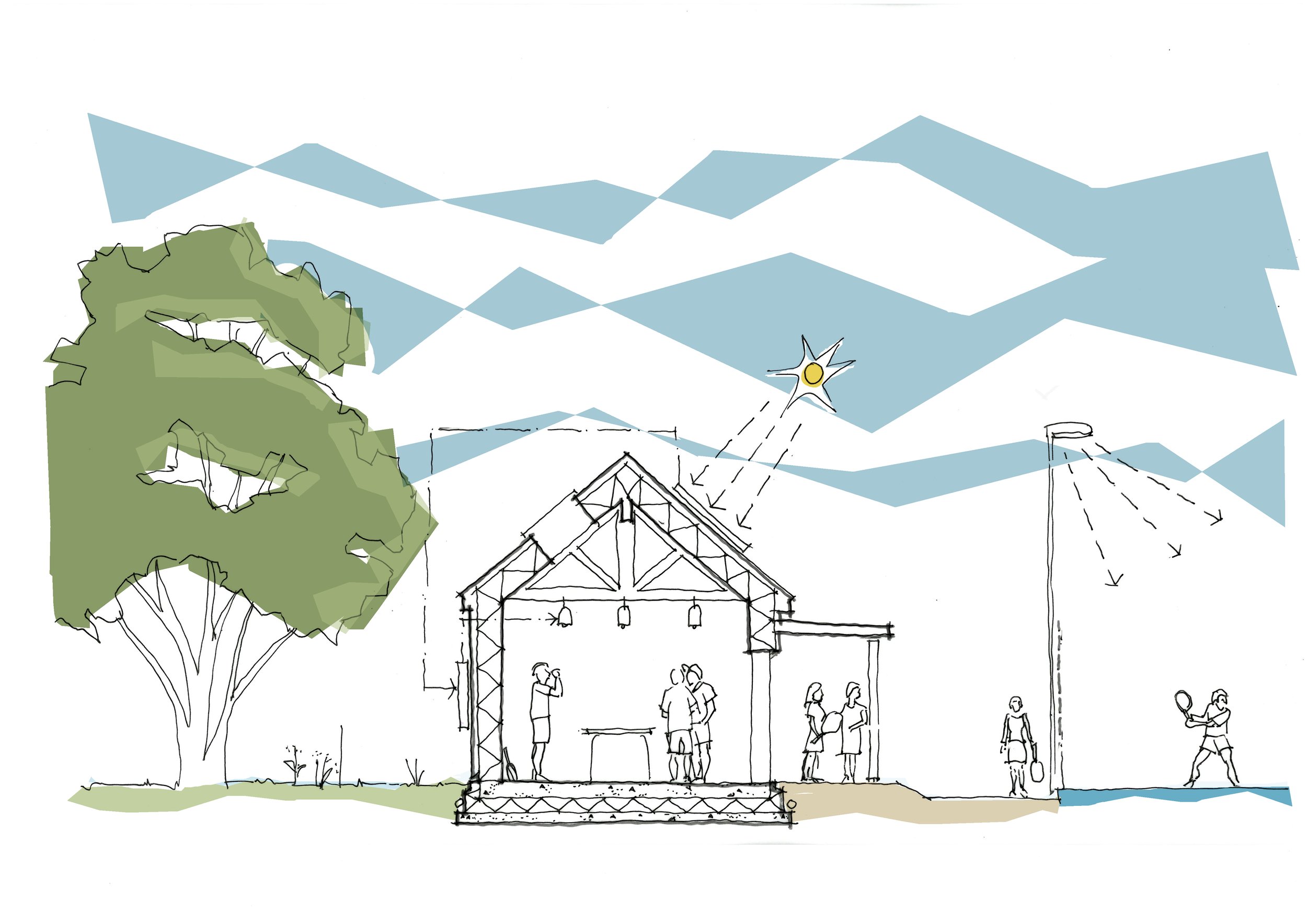
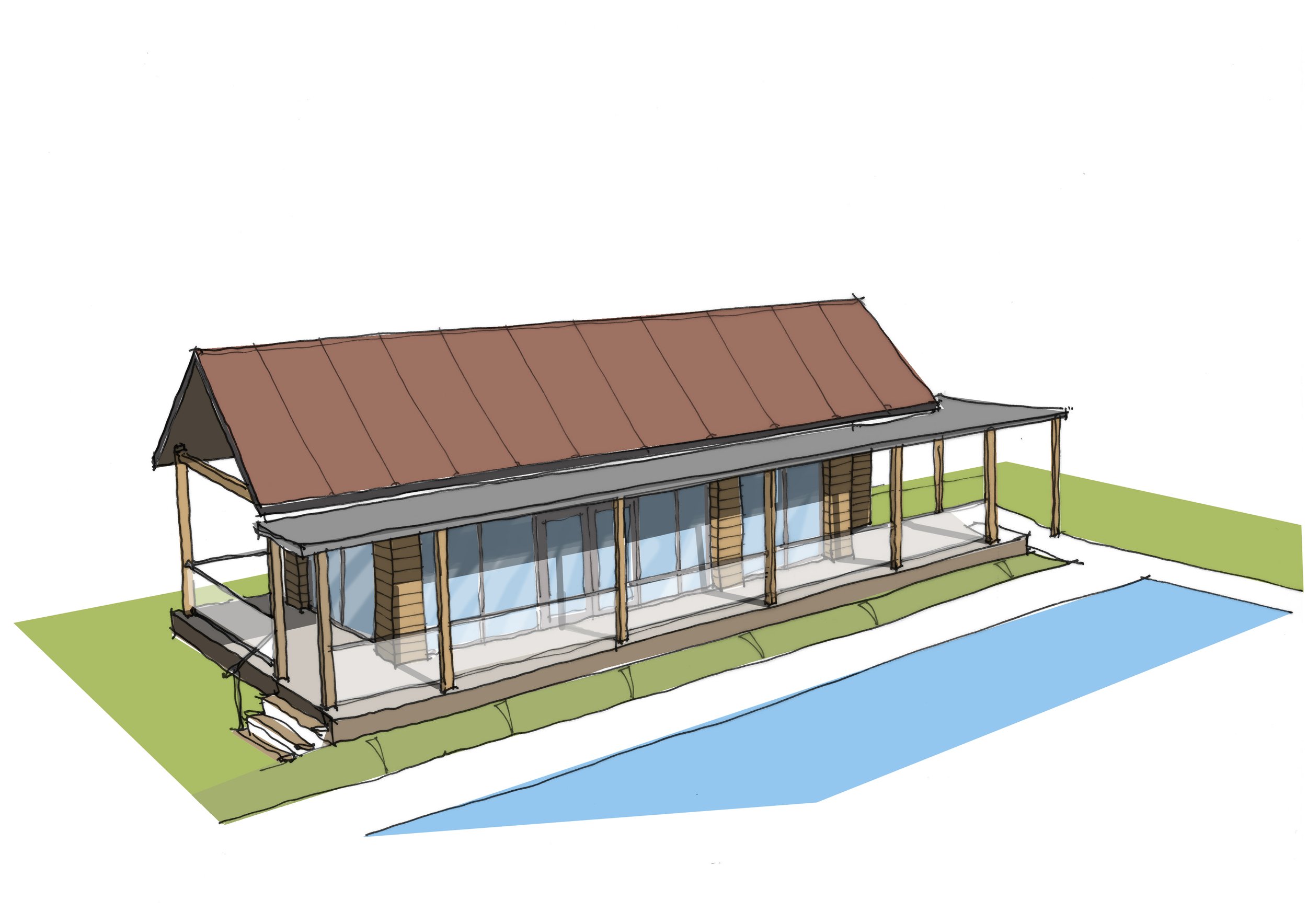
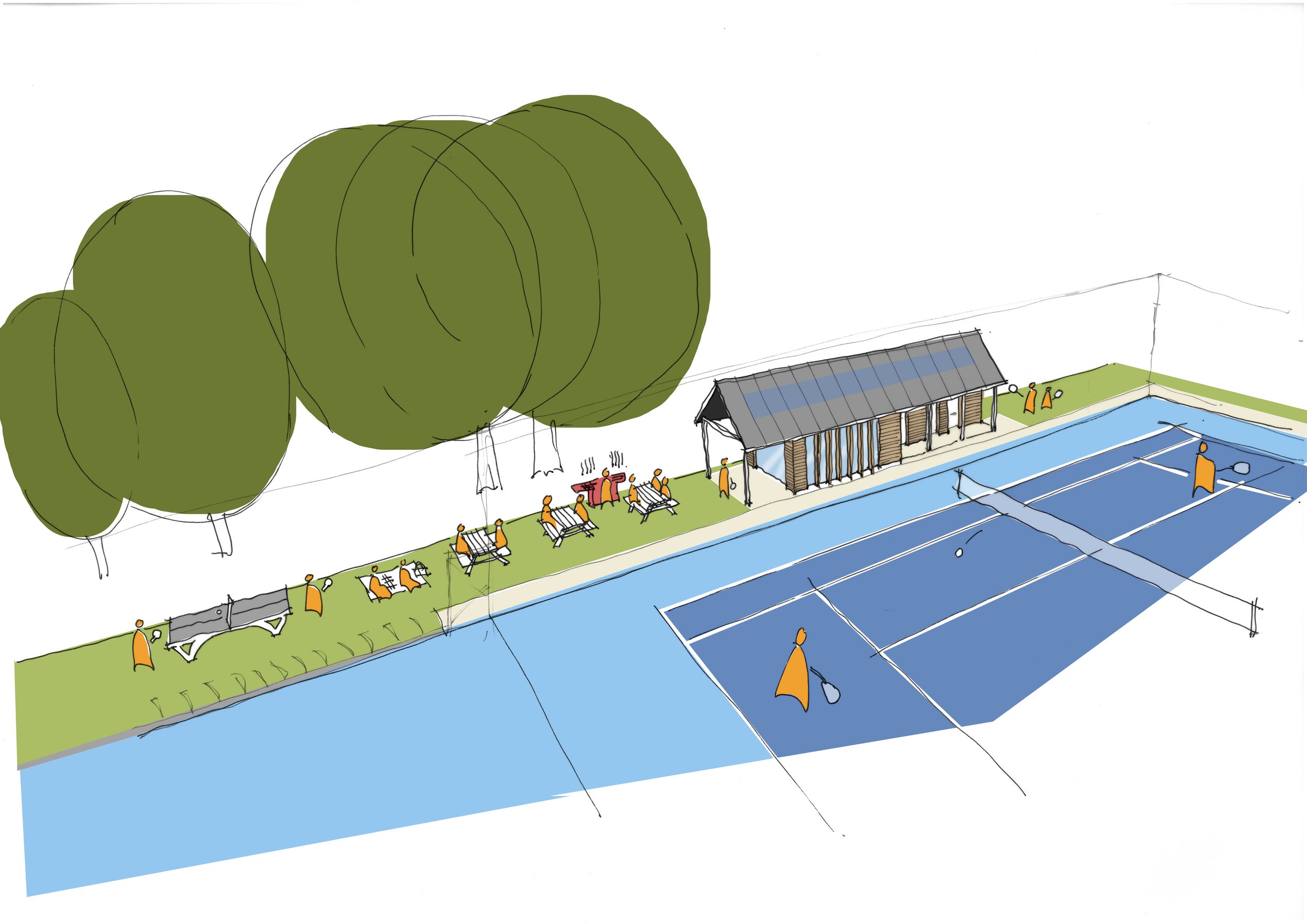
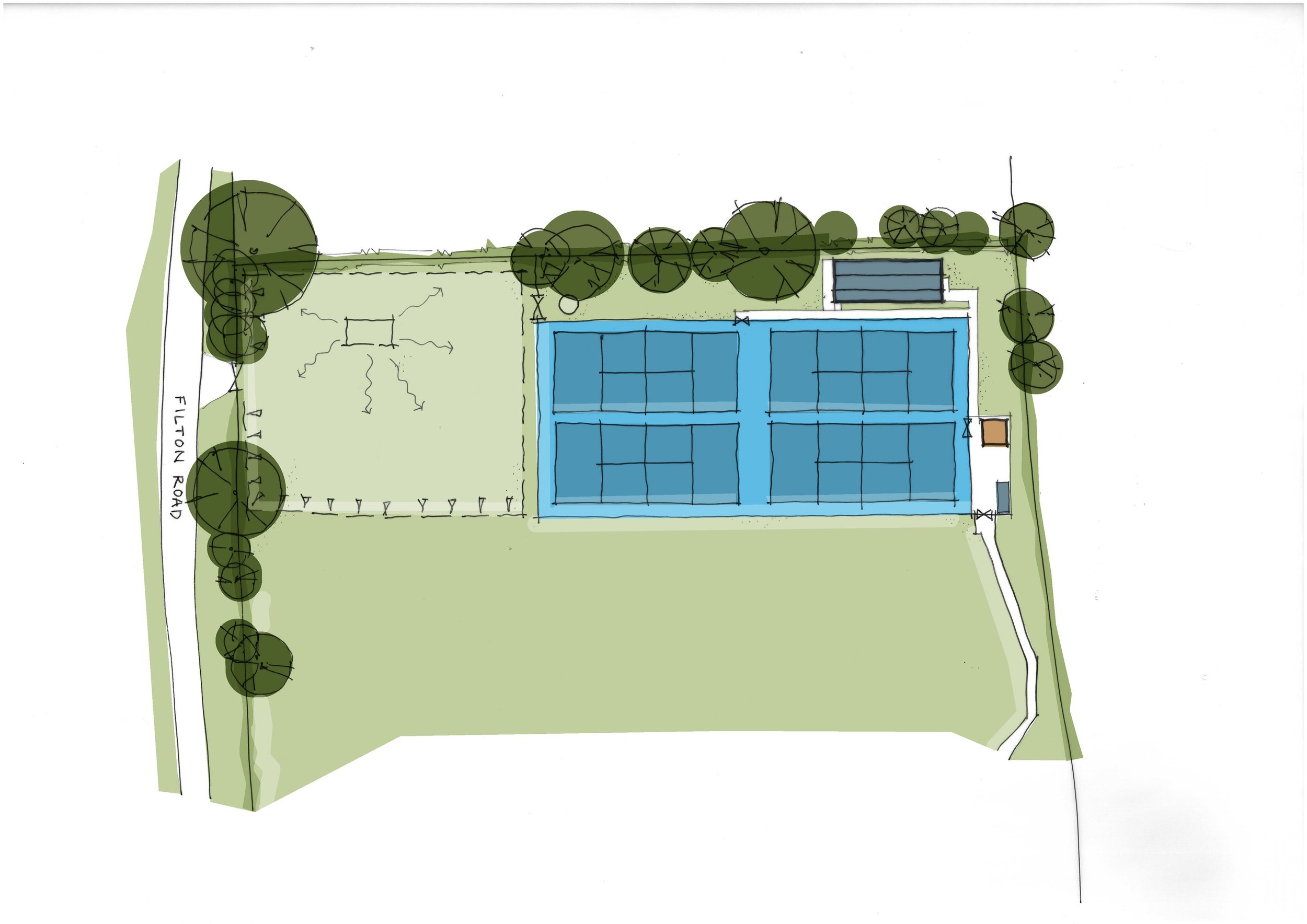
Above: Design Development
Complete: Westbury Swimarium
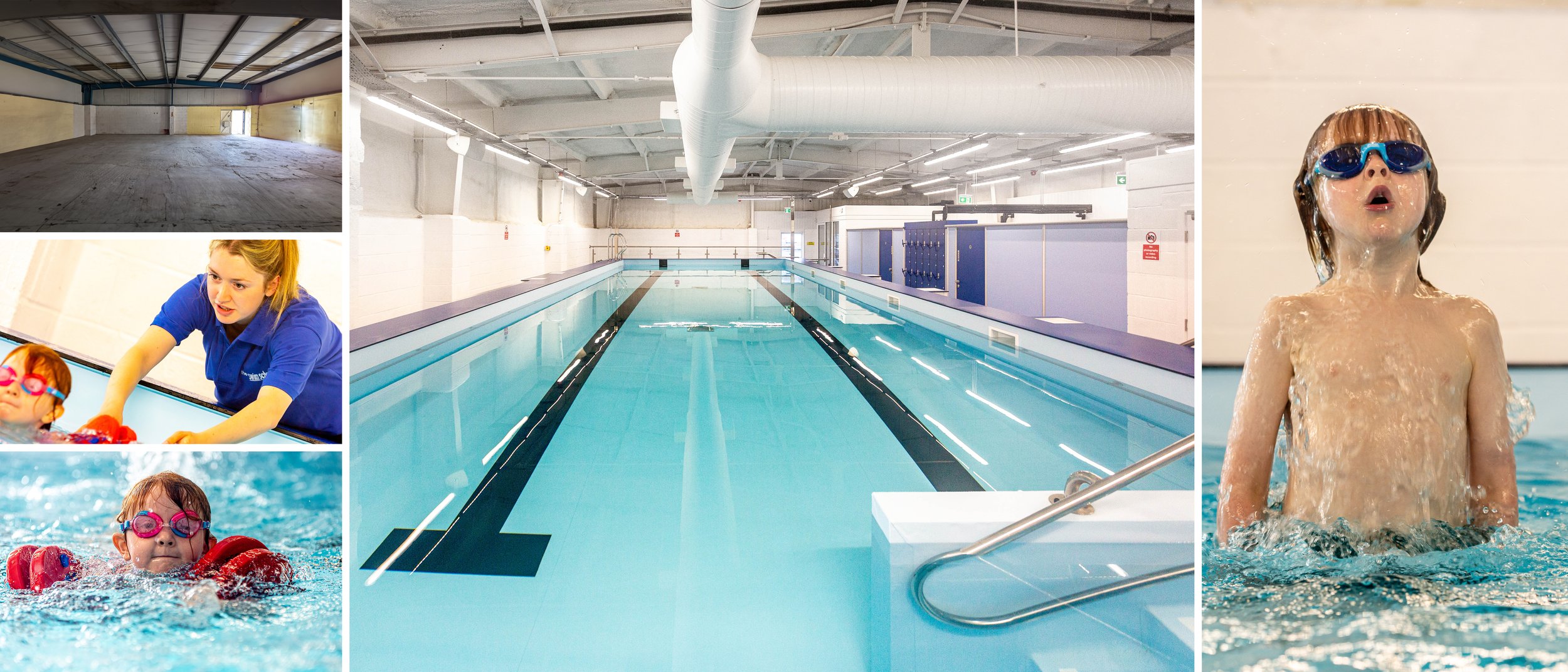
Sarah Harris and Rick Johnstone, of the Swim School Ltd, came to gcp with a challenge: to design and deliver their ‘Swimarium’ in Westbury, Wiltshire. Being a retrofit of a former warehouse made the brief a little unusual. The pool itself had already been procured, leaving the challenge of accommodating the ancillary facilities and plant in the remaining space.
The pool occupies approximately a 100m2 footprint, within a building that has a 230m2 gross internal area. Necessary accommodation also included: An entrance hallway, an accessible wc, 2 changing rooms, a viewing gallery, lockers, a plant room, a chemical store, raised teaching walkways and compliant escape routes; making the spatial tolerances are extremely fine.
gcp undertook all the design work from the initial feasibility study through to concept, planning and technical design stage. The warehouse underwent an extensive thermal and structural upgrade, with half the roof accommodating solar pv panels. gcp also supported the construction team throughout, with the design calling for some unique detailing around the piled pool slab, teaching walkways and external walls. All credit goes to the contractor, Hill Project Management, who ran the build stage diligently and professionally, under significant time constraints.
Recently we were also pleased to be invited along to the grand opening. With a long waiting list and thousands of satisfied customers, we hope that this will be one of many more Swimariums to come!